


How to Add Music to a Video on Desktop, Mobile, and Online
When learning to edit video projects, the video itself is not the only thing you should focus on. Arguably, adding the right audio is as important as the visuals themselves. As such, multimedia editors should learn how to add music to a video when using different platforms and software to make their editing arsenal sharper and more versatile. In this article, we will provide a full tutorial on adding music to video editing software across desktop, mobile, and online platforms. We will also explore the best uses of each program to help our readers decide which among them best suits their video editing needs.

- GUIDE LIST
- Part 1. Add Music to Video on Desktop (Windows & Mac)
- Part 2. Add Background Music on iPhone & Android
- Part 3. Add Music to Video Online (No Software Installation)
- Part 4. FAQs About Adding Music to Video
Part 1. Add Music to Video on Desktop (Windows & Mac)
ArkThinker Video Converter Ultimate
Best Used For: Adding music to videos without dealing with a complex editing interface.
To get started with desktop-based video editing tools, we will begin by featuring the most versatile multimedia tool in this article: ArkThinker Video Converter Ultimate. Although this program is designed as a format converter, it also includes essential editing tools, including an audio editor for adding music overlays to video files.
Although most of the programs on this list are video-editing tools designed for beginners, ArkThinker Video Converter Ultimate still has a major advantage over them in ease of use.
The main factor that makes the tool highly accessible is that it does not feature an editing timeline; adding audio files to videos being processed in the program can be done in three simple steps, as shown in our tutorial below.
To make it easier to learn how to use the program, make sure to download it first.
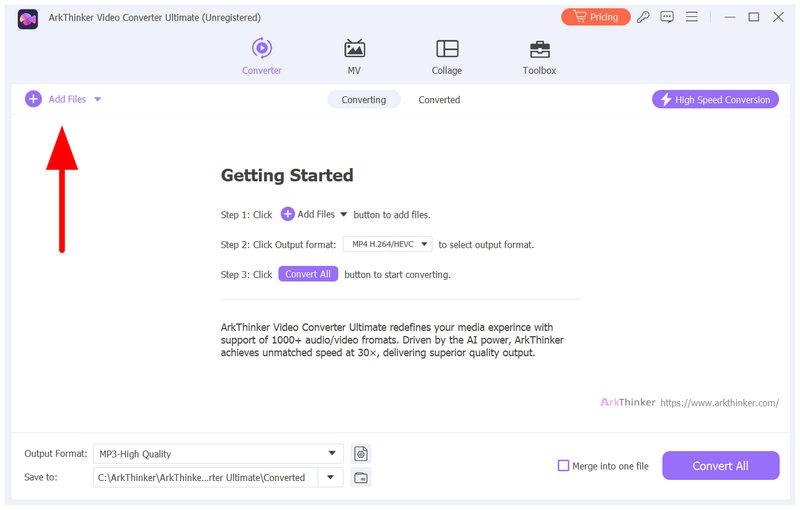
Open ArkThinker Video Converter Ultimate and select the Add Files button in the Converter tab.
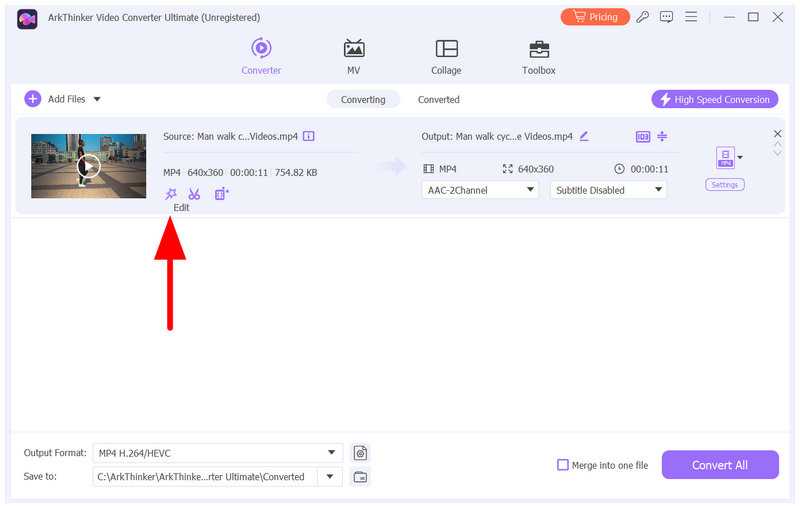
Once the video has been imported, select the Edit button.
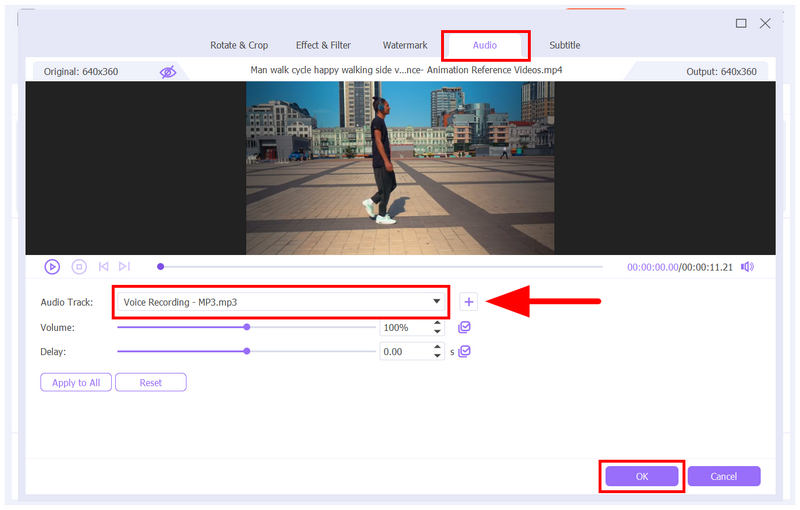
In the Edit menu, go to the Audio section. Then select the Add button to access your files and locate the audio file you want to add. You will have the option to adjust the audio’s Volume and Delay. Once the audio has been added and the settings adjusted, click on OK.
Once the audio has been added, you will be redirected back to the Converter tab. There, select Output Format, go to Video, and choose the Format you want to save your video in. You can select the same file type your file is currently saved in.
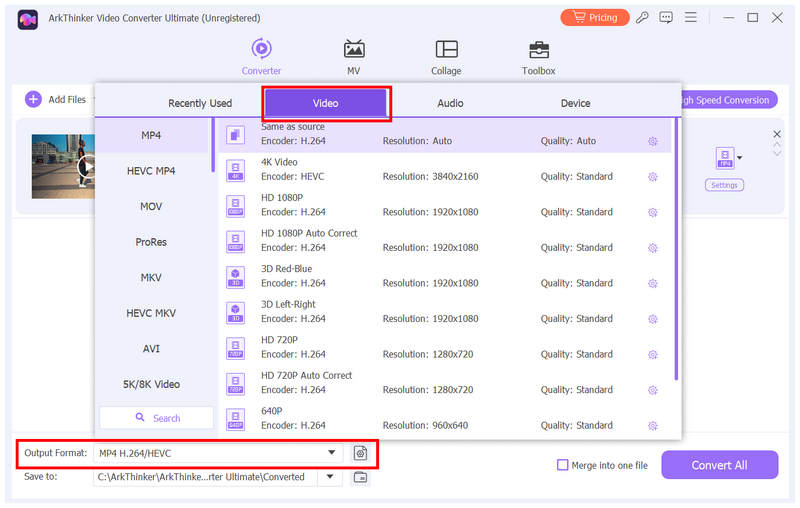
With the audio added and the video format set, click Convert All to start producing your video now, using the audio file you selected as an overlay.
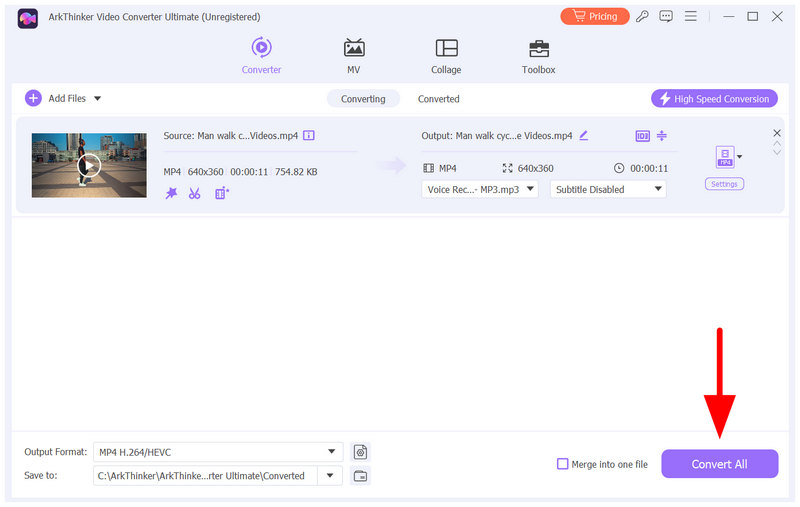
If you plan on adding music to your video as simply as possible, ArkThinker Video Converter Ultimate should be your main choice. Although it provides minimal adjustment to the audio, the pure simplicity will prove useful for complete beginners.
CapCut Desktop
Best Used For: Users looking for a beginner-friendly editing tool for desktop.
Moving forward to the next option, we have CapCut for Desktop—the Windows and Mac versions of the popular mobile video editor. If the previous option in this list is the beginner-friendly program, CapCut Desktop is the choice for users who plan to learn the fundamentals of adding music to a video for free.
To start, CapCut for PC and Mac features a video editing timeline similar to professional video editing tools like Premiere Pro or DaVinci Resolve. However, importing videos and audio in the program is not as complex as professional solutions. Adding MP3, MP4, or other media files for editing in the program can be done by simply clicking and dragging the files you want to import.
For users who want to step up their video editing skills by moving forward to an intermediate editor, make sure to read our guide to learn the basics of CapCut for Desktop.
Open CapCut and select Import to add the video you want to edit.
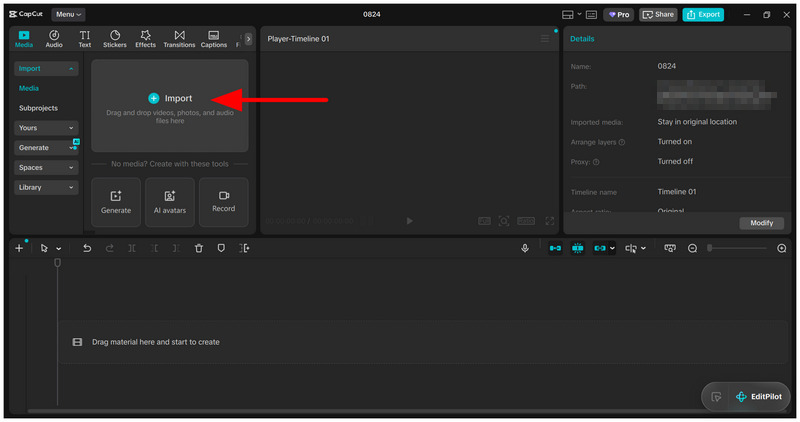
With the video now added to the Import section, click and drag it down to the Editing Timeline.
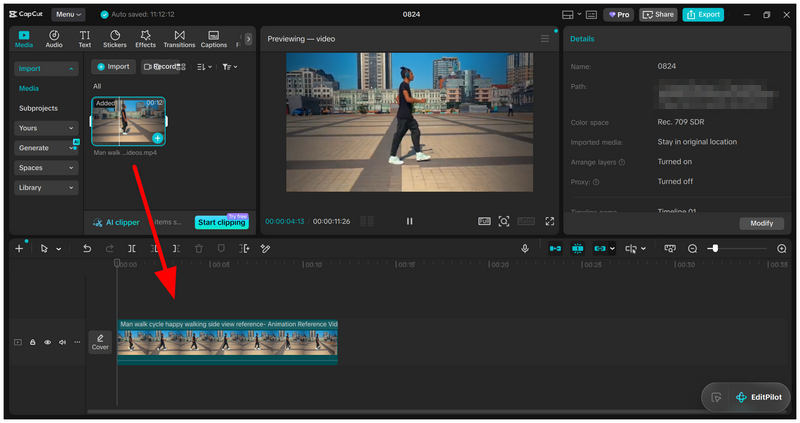
Once the video file has been added, select Import again, then add the audio file you want to include in the project. Click-and-drag the audio file to the editing timeline.
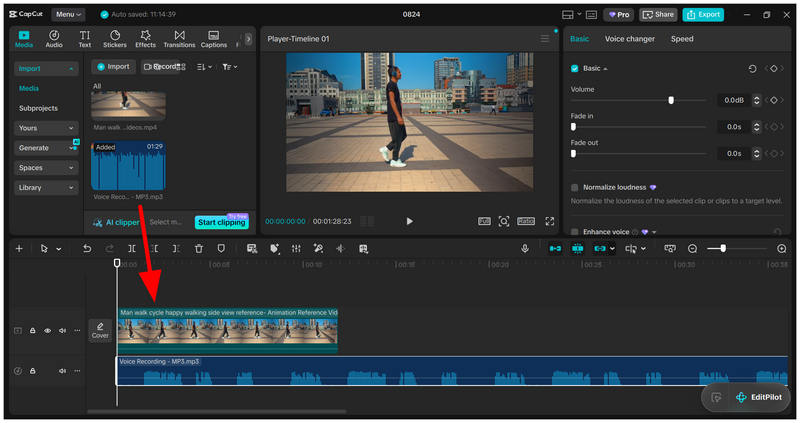
If you are already familiar with CapCut mobile, the desktop version is the recommended next step for learning how to add music over video.
iMovie for Mac
Best Used For: Mac users looking to learn video editing in the built-in editing tool of their Mac desktop.
When thinking about Apple, exclusivity is one of the descriptions that may come to mind. In this case, the beginner-friendly video editing tool in iMovie is a good way to learn how to add music to a video for free.
The built-in video editing tool on Mac computers, iMovie, is similar to CapCut in ease of use. It is not complicated to use, but it is also not easy. As such, the program is a good intermediate option to edit videos.
To learn how to use the program, please read our two-step guide below.
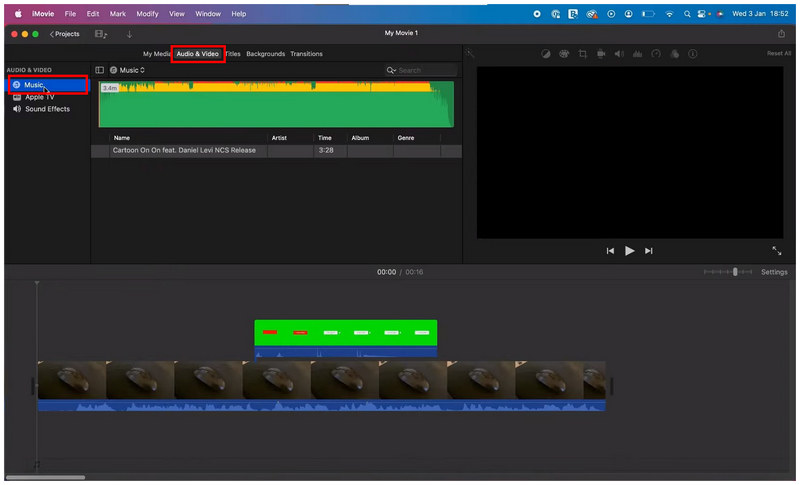
Open iMovie and go to the Audio & Video tab in the taskbar. Then, click on Music to open the imported music files in your iMovie editor.
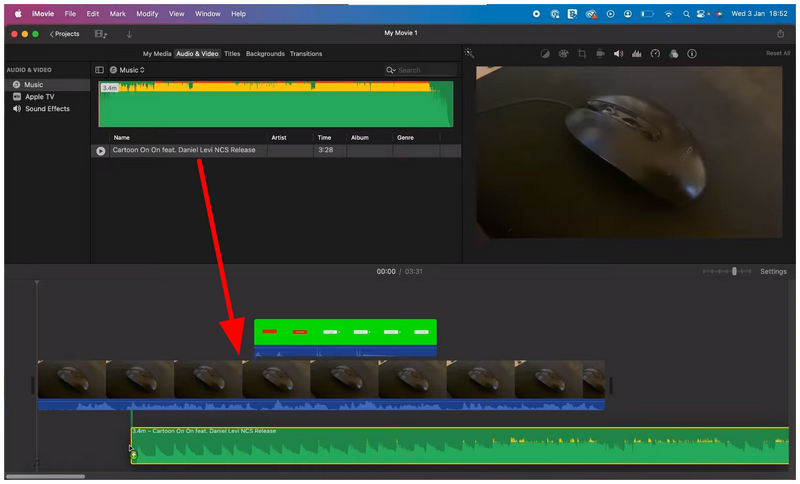
Under the Music tab, click on the audio file you want to add to the editing timeline. Then, click and drag it to the Editing Timeline to add the audio file to your video editing project.
Although this program is about as difficult as CapCut and other beginner-friendly editors, iMovie is slightly easier to use. This is the case since iMovie has access to the saved AIFF or other audio files from Apple's library that your program is connected to. The software's viability as a free solution for adding background music to video is also a significant factor.
Part 2. Add Background Music on iPhone & Android
CapCut
Best Used For: Directly editing videos ready to upload for short-form content apps.
One of the premier mobile video editors, CapCut is perhaps the most popular solution for mobile users. As such, adding audio to CapCut video editing projects is easy.
In addition to its ease of use, the program is a good option because it offers multiple ways to add music files or apply video editing adjustments, such as video looping, on CapCut. This is its most compelling feature, which may help editors choose their preferred audio file.
To learn how to use CapCut for video editing and adding audio files, make sure to read our guide.
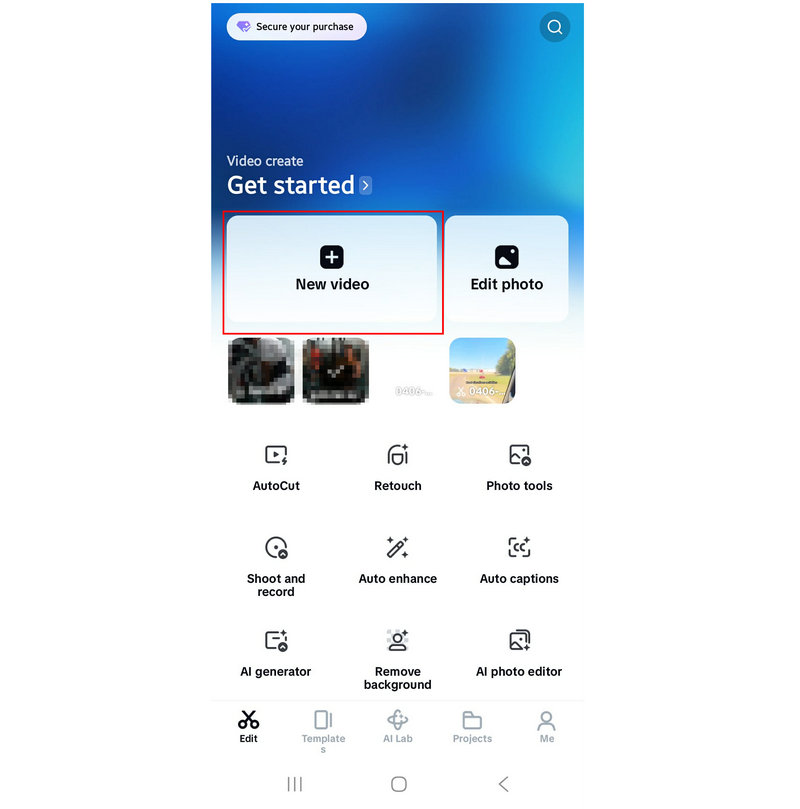
Open CapCut Mobile and select New Video.
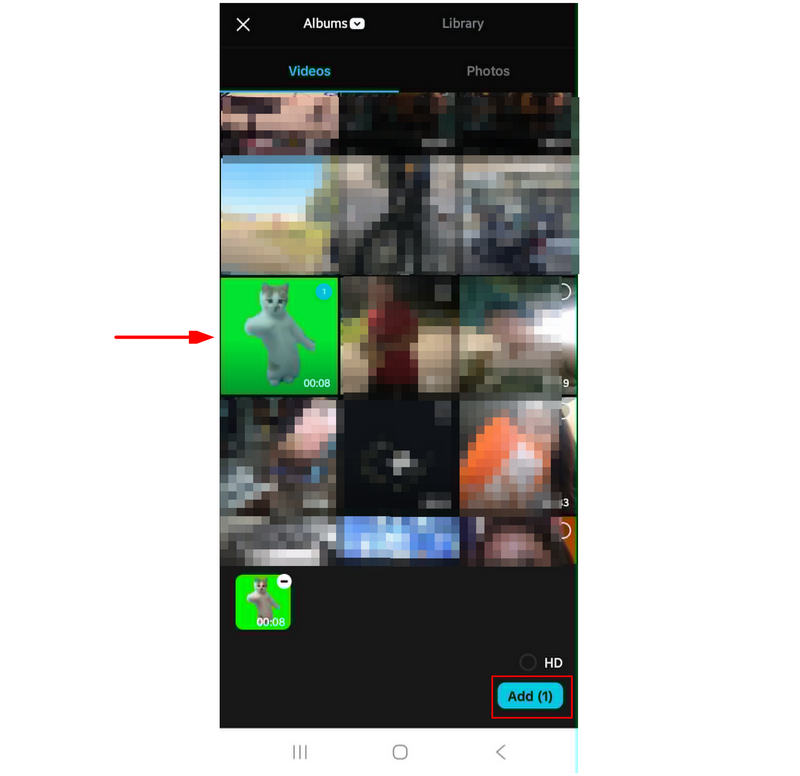
Among your video files, tap the video you want to edit, then confirm by selecting Add.
In the video editing tab, select the Audio tab or the Add Audio option in the editing timeline.
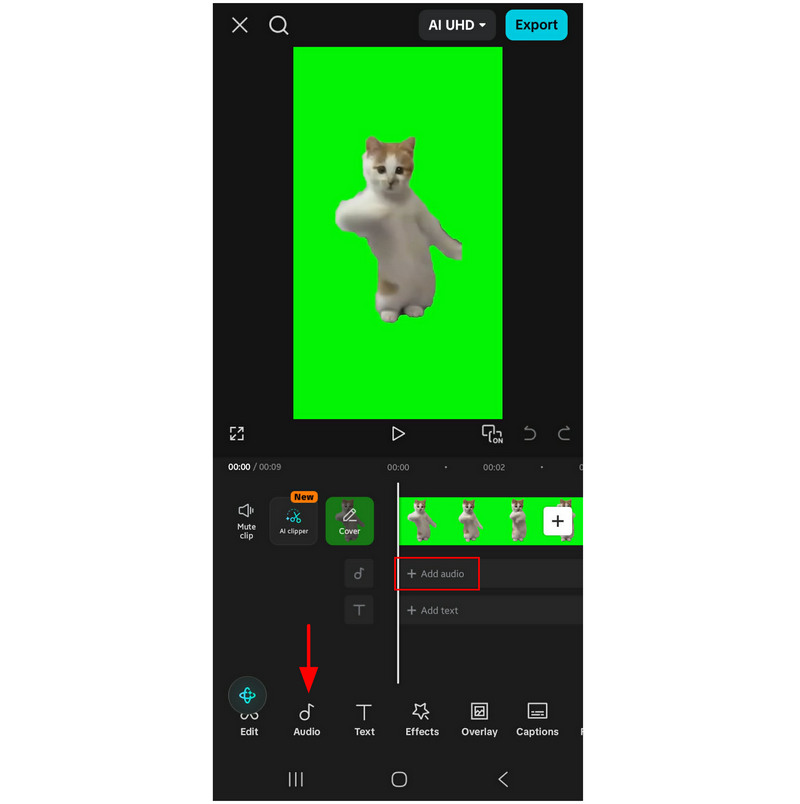
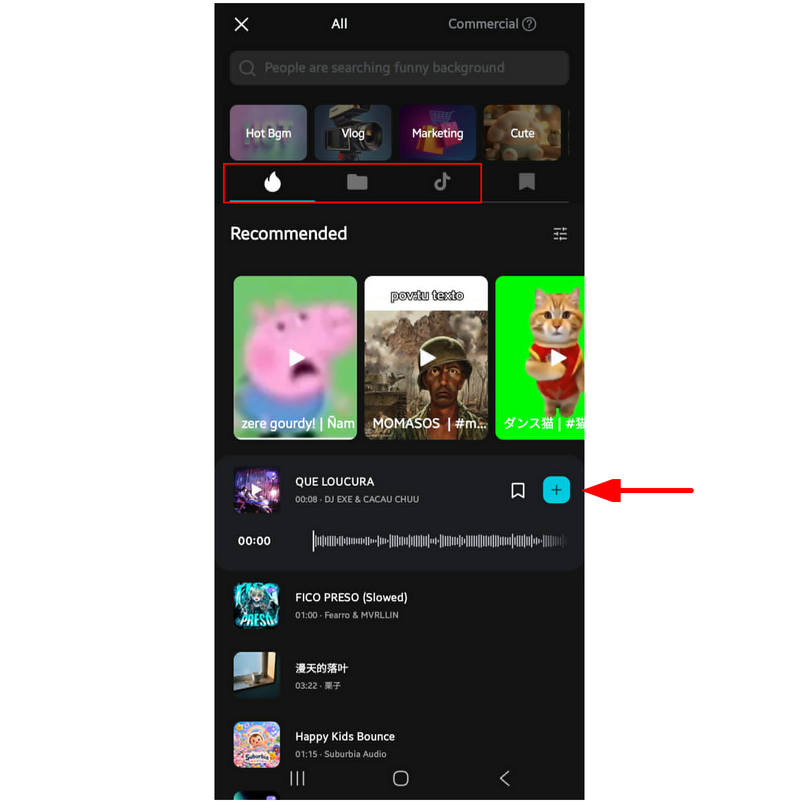
In the Audio menu, you will have three options to choose from. You may select an audio file from the Recommended, Local Files, or TikTok Music options. Select the Add button for the audio file you want to use.
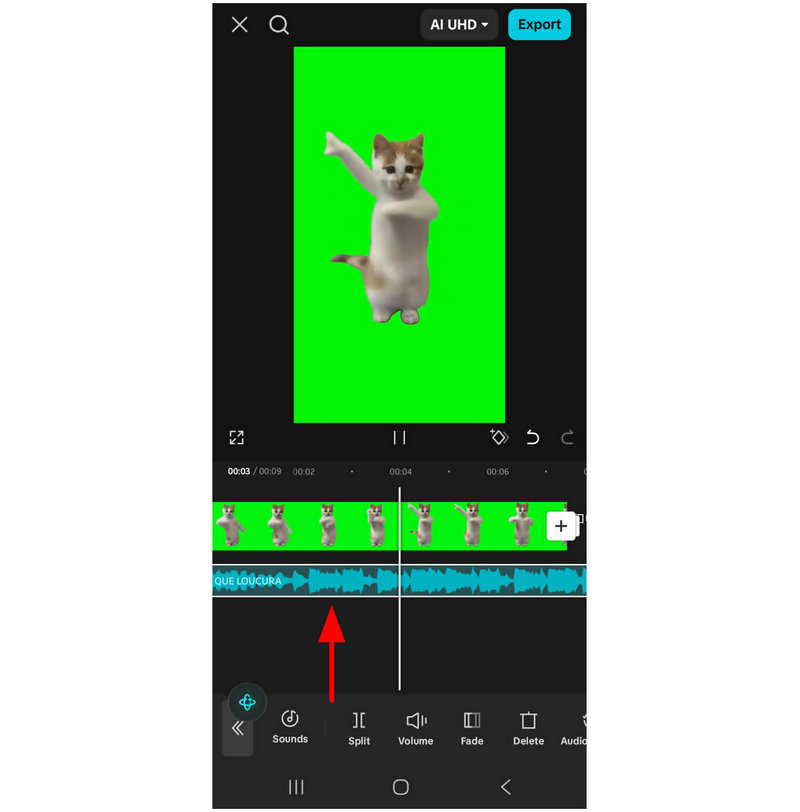
After selecting the audio you want to use, you will be redirected back to the main editing timeline. The audio you have selected is now added.
If you plan to edit short-form videos, direct access to trending TikTok music is a key feature that makes CapCut much more practical.
InShot
Best Used For: Mobile video editing for general social media content.
A direct competitor to CapCut, InShot is another mobile-based editor designed for accessibility and practical use in short-form video production. Also, while CapCut's direct target audience is similar, InShot has a more accessible interface, making it slightly easier to use. Moreover, the program's pricing plans are more flexible than those of its direct competitor. This makes the program a good solution for users who plan to record vlogs on iPhone or Android mobile devices.
If you want a program similar to CapCut and other mobile editors, InShot is a viable option. To learn how to use the program for basic video editing such as adding audio overlays, make sure to read our guide below.
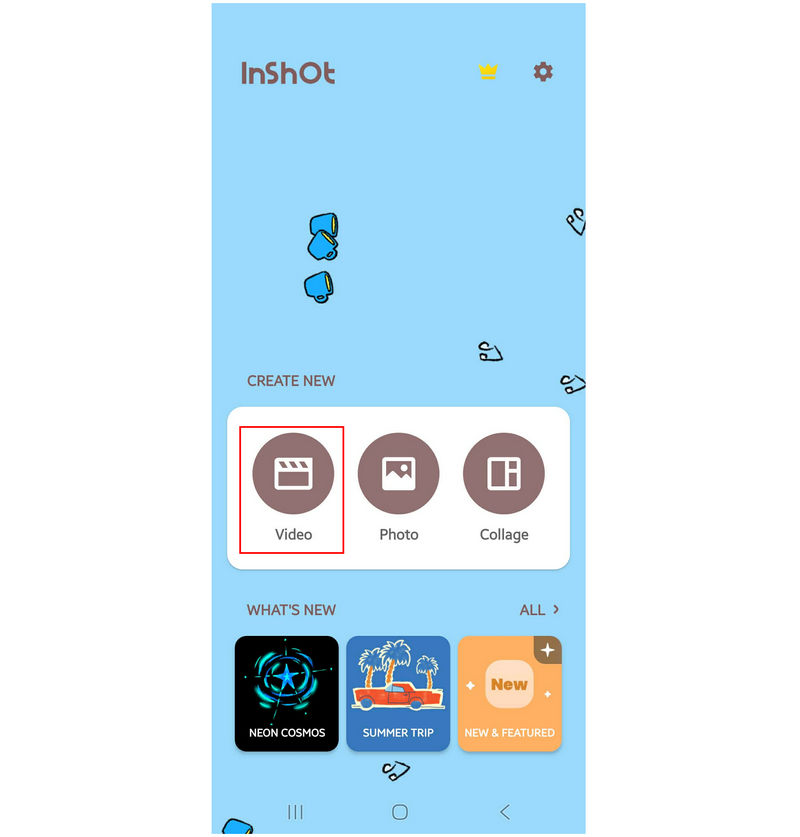
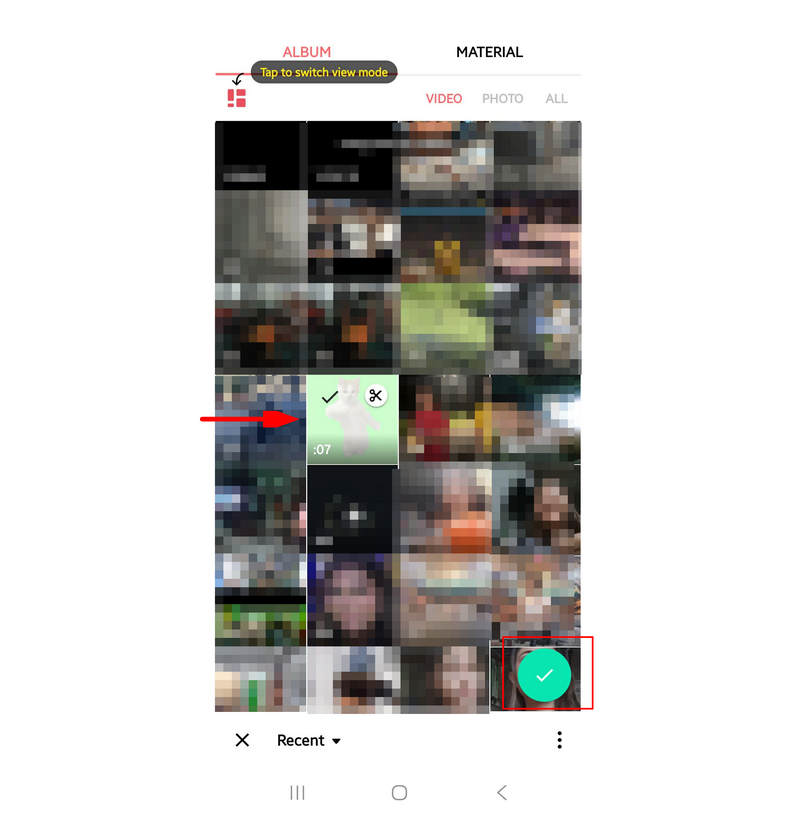
Open the InShot app and select Video.
Among the available videos, select the file you want to edit, then click the Check button.
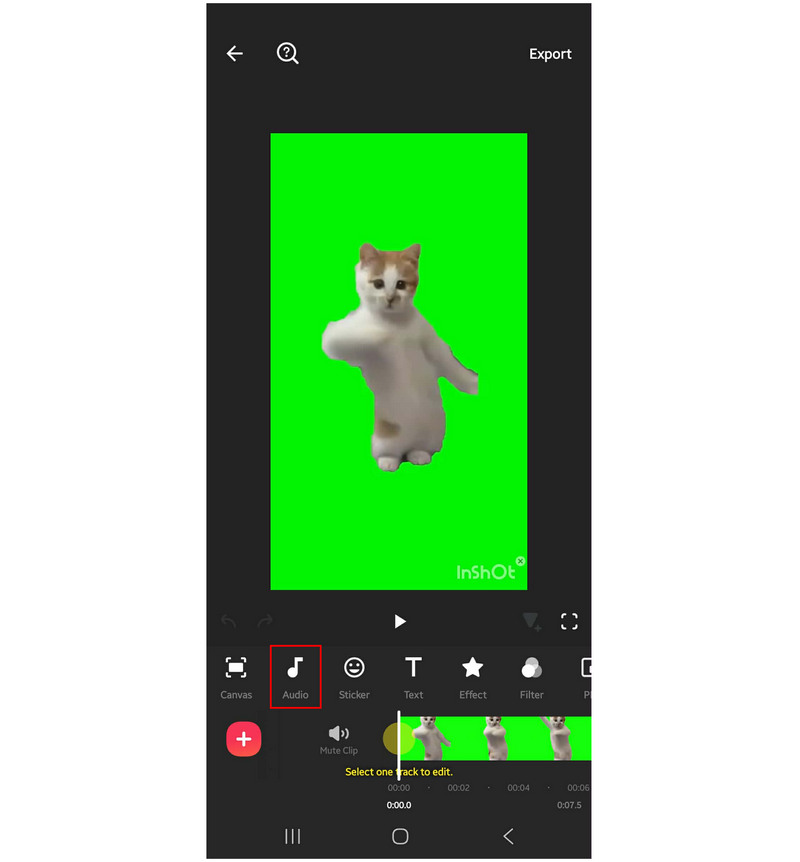
In the InShot editing timeline, select Audio.
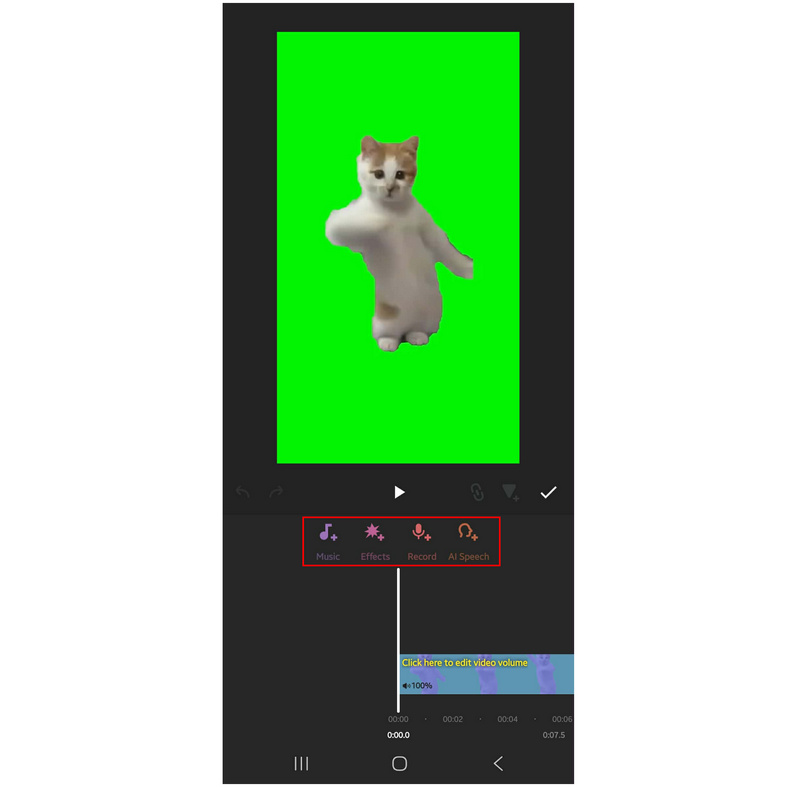
In the Audio Menu, select between Music, Effects, Record, or AI Speech. In this tutorial, we will select Music.
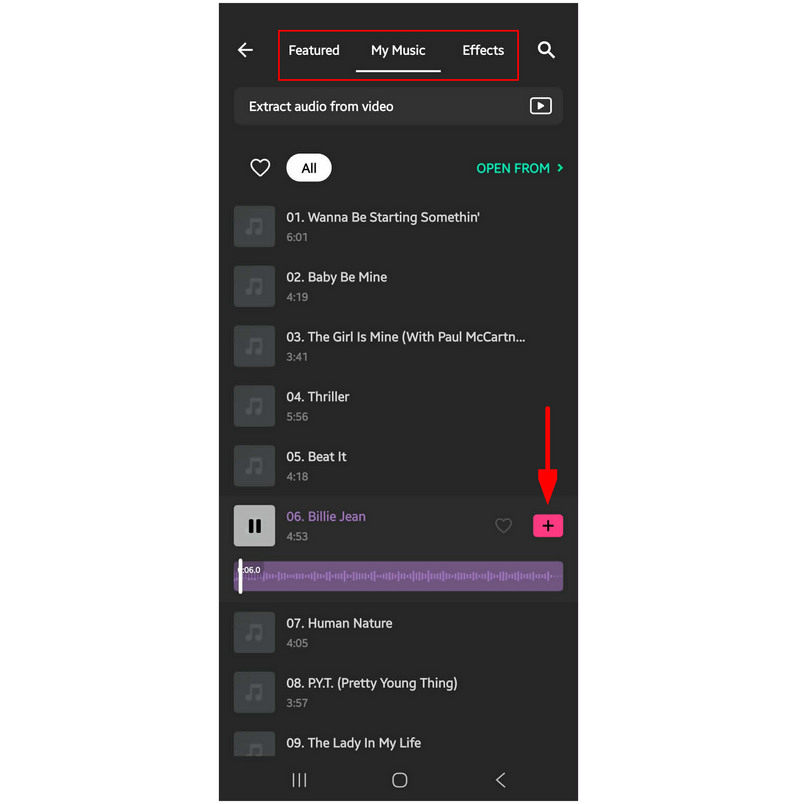
Among the available music, choose between Featured, My Music (Local Files), or Effects. Then tap the audio you want to edit and select the Add button.
After selecting Add, the video you just selected will be added to the editing timeline.
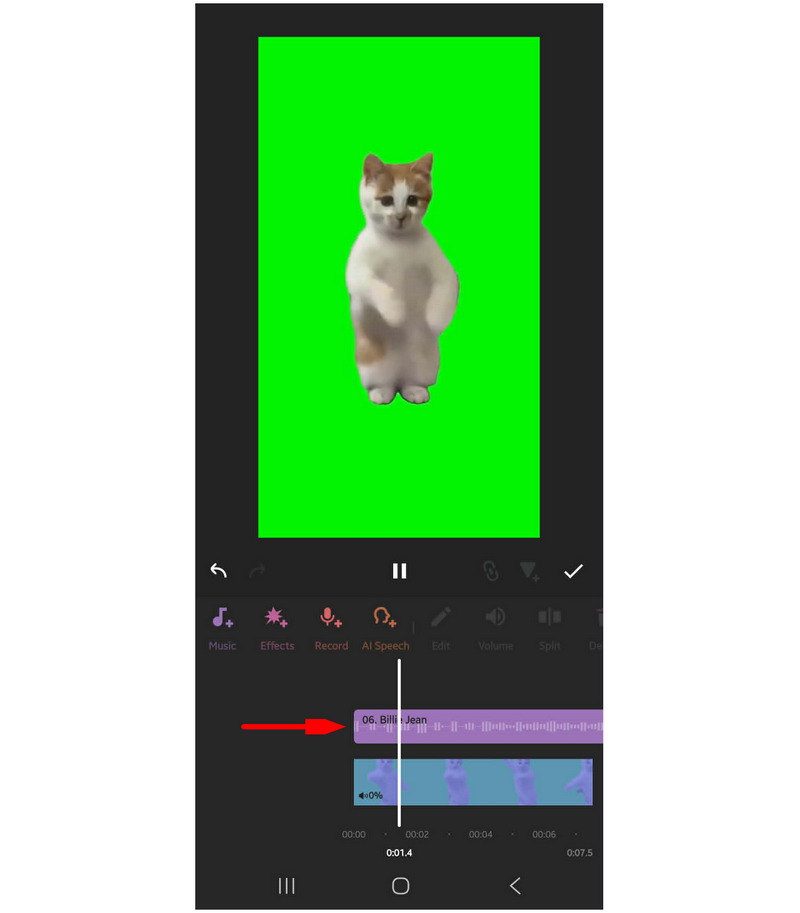
If you plan to stick to free video editors, keep in mind that InShot has fewer in-app ads than CapCut. However, videos edited in the tool have visible watermarks on the lower left side of the media. If you don’t mind the watermark, this tool is a fine option for learning how to add songs to a video.
AllVidConverter
Best Used For: Converting video files to audio format.
Moving forward to the third option for mobile devices, we have AllVidConverter. Unlike CapCut and InShot, this program is not designed as a video editor. Instead, the tool works more like a format converter, converting video clips into music for other projects.
Although this program cannot be used to add music to videos, it still gets the job done if you want to convert a video file to audio and use it as an audio overlay to another video project.
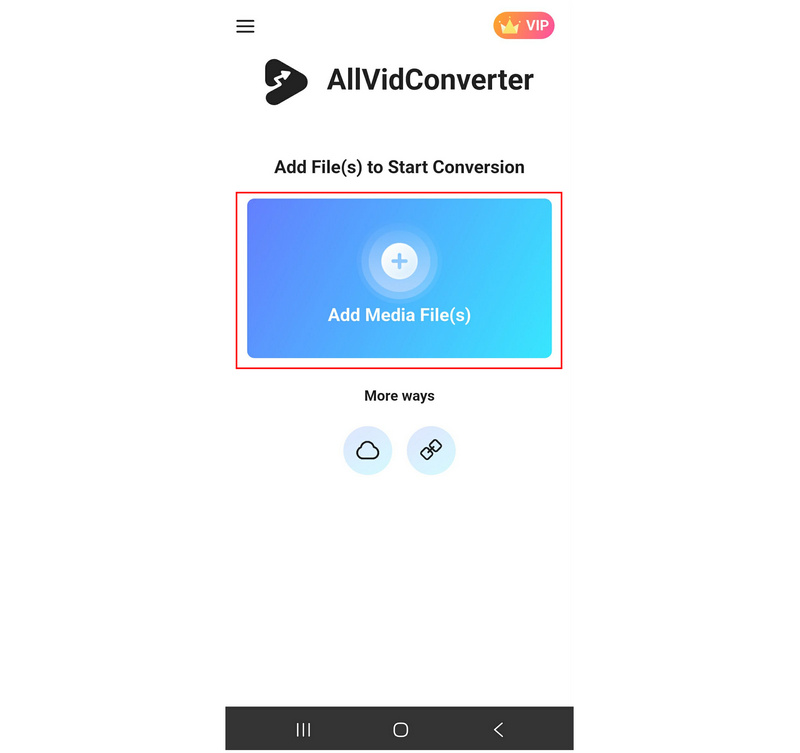
Open AllVidConverter and select Add Media Files.
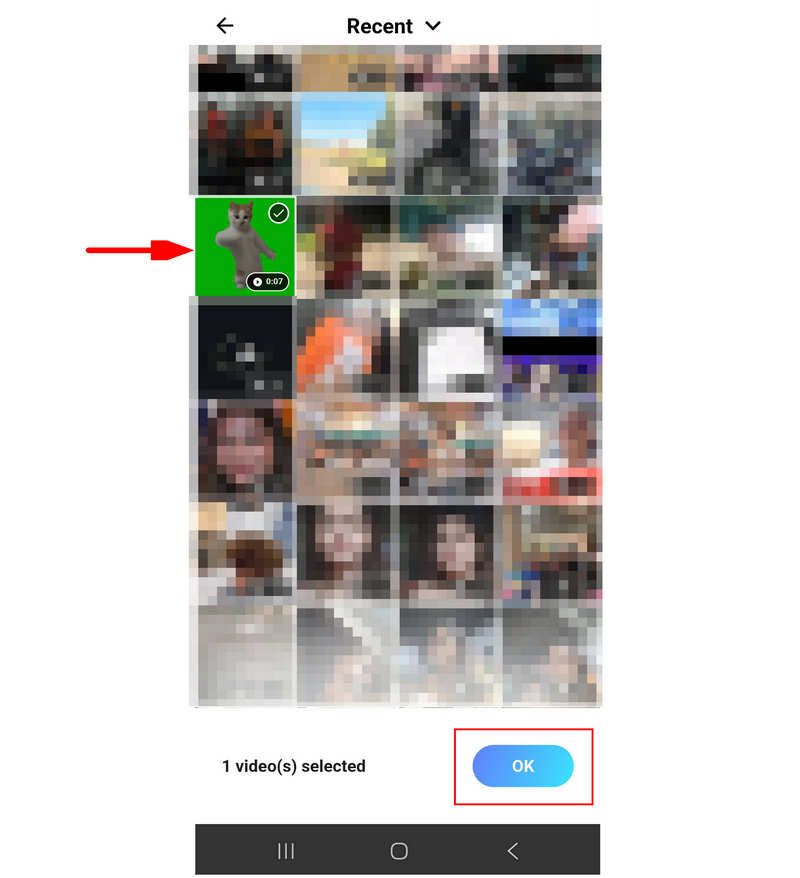
Select the video you want to convert, then tap the OK button.
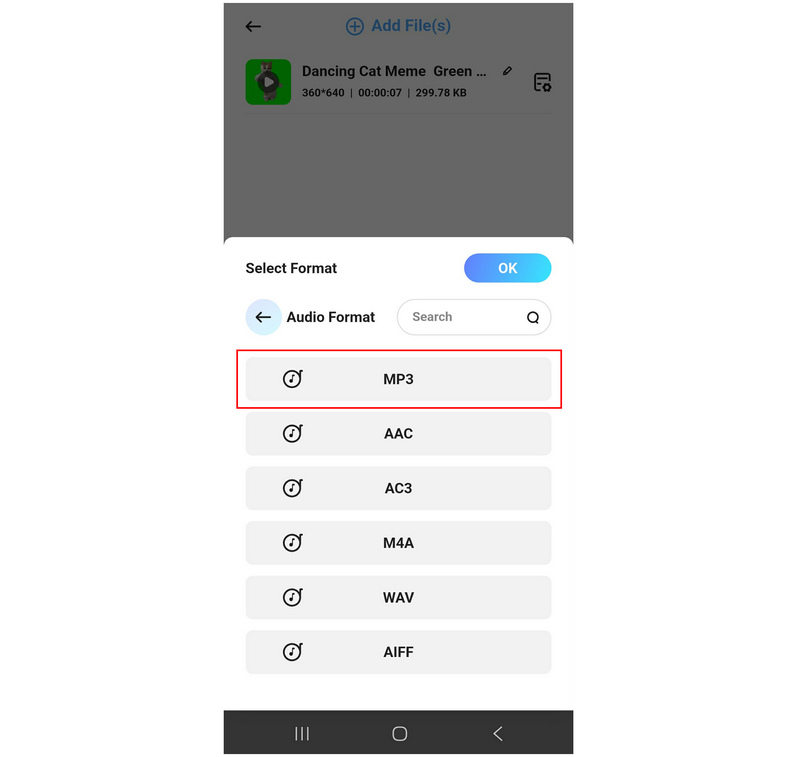
In the Select Format option, tap on Audio Format.
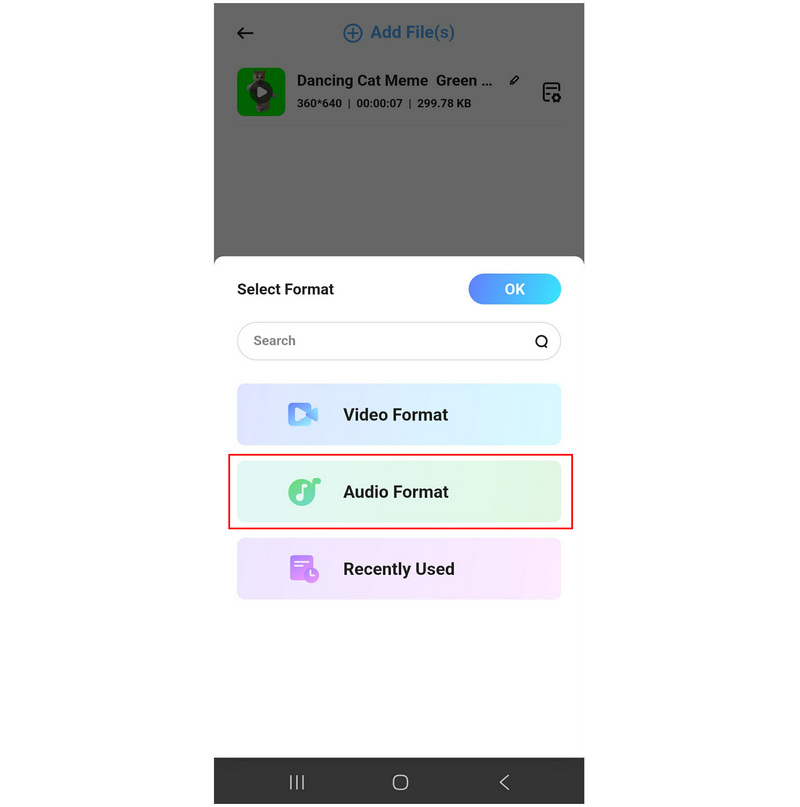
Then, choose the format you want to use.
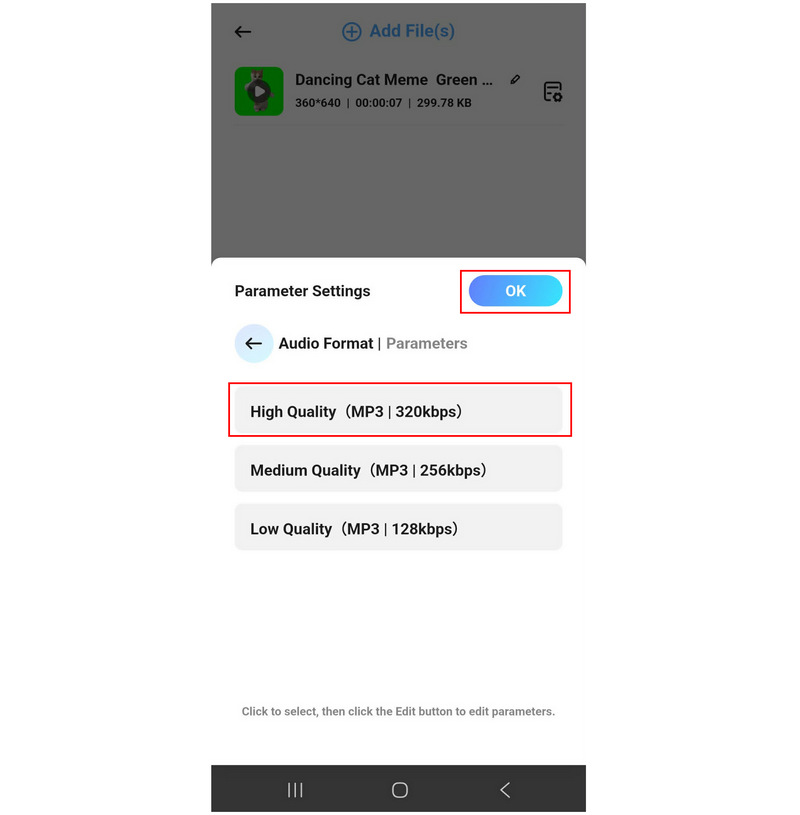
Finally, select the quality you want to save the converted video into and select OK.
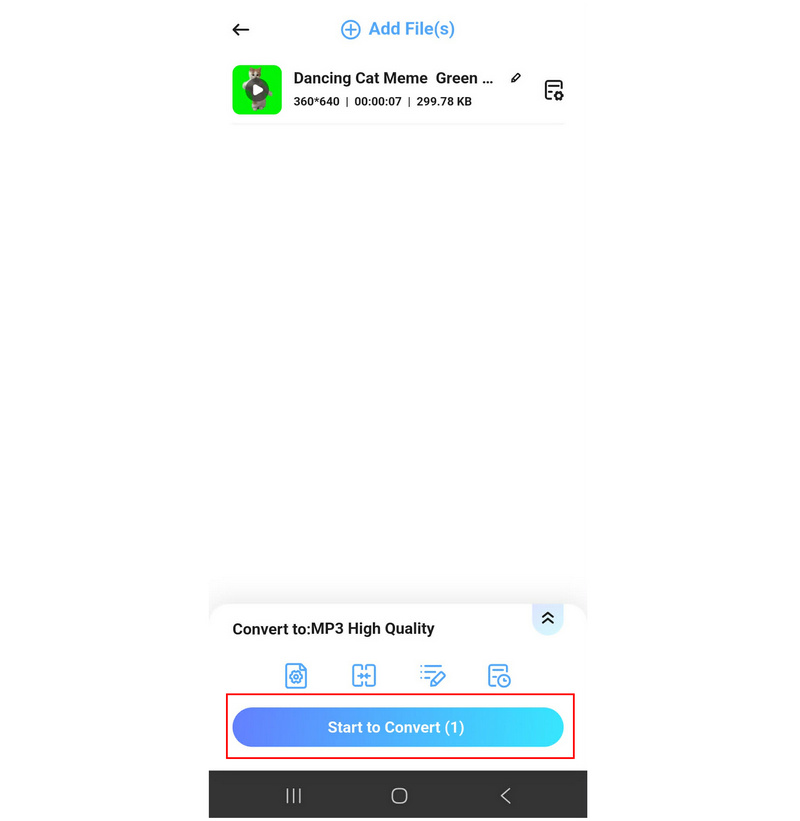
With the conversion parameters set, select Start to Convert to convert your video file to audio.
Since AllVidConverter is not an editor, we do not recommend using it to add music to video projects.
Part 3. Add Music to Video Online (No Software Installation)
Canva
Best Used For: Basic video editing with practical access to photo editing options.
Among online video editing tools, Canva is perhaps the most popular and notable. As such, we will begin our online editor tools by providing a tutorial on how to add music to the Canva video editor.
Although better known as photo and presentation editing software, the multimedia online tool also includes dedicated video-editing features. Some examples available in Canva are video looper, cutter, trimmer, and other essential editing tools. If you are already familiar with Canva as a photo editor, learning its video editing option won’t be a problem.
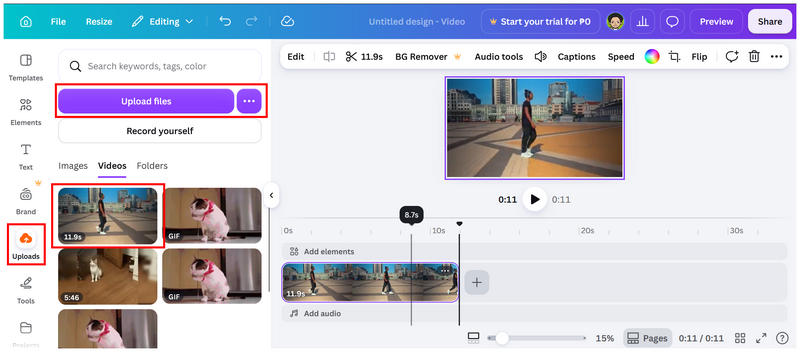
Open Canva and select Video.
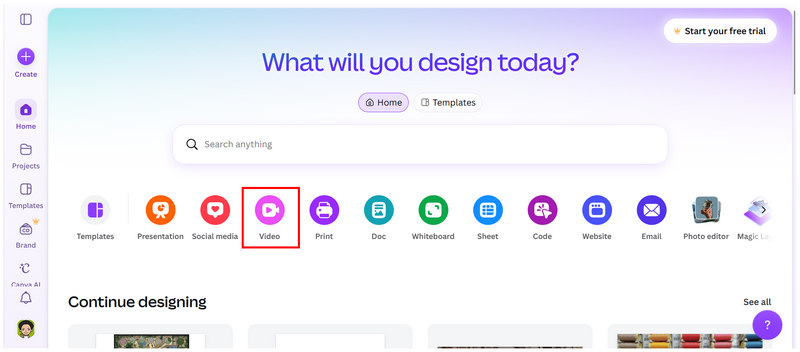
In the video editing timeline, select Upload, then Upload Files. Once the video file has been added, click the Video to add it to the timeline.
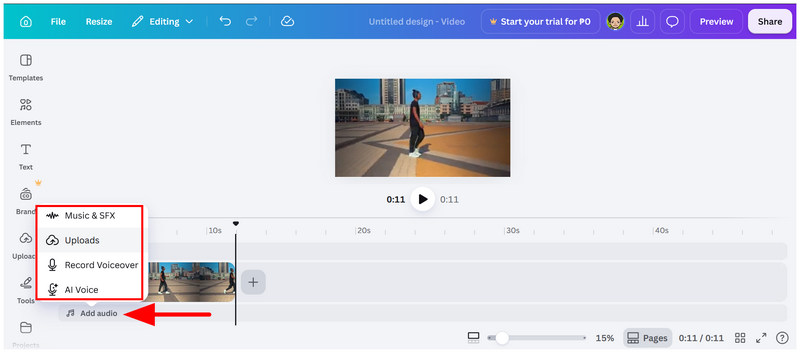
In the video editing timeline, select Add Audio, then choose from Music & SFX, Uploads, Record Voiceover, and AI Voice. We will use the Uploads option in this tutorial.
After selecting the Uploads option, the same-named menu will open again. Select Upload Files, and then click the uploaded audio file to add it to the timeline.
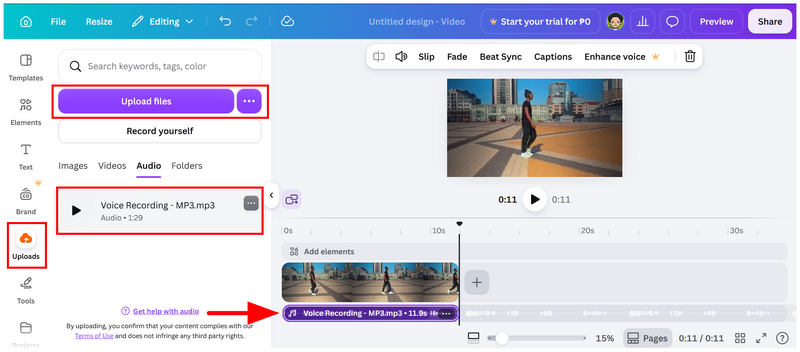
Canva is a great choice for learning the basics of video editing if you already have some experience with it as a photo editor or for presentations.
Kapwing
Best Used For: Fast browser-based editing since it was designed exclusively as a video editor.
Since Canva’s video editor is only an additional feature, it lacks the exclusivity of other online tools. In this case, an exclusive video-editing tool should be one of your top considerations when learning how to add music to a video online.
In addition to being easier to use, the program offers multiple audio addition options. It supports both uploading files such as audio and adding links. This is a major factor for Kapwing, since it can source videos from music library sites it supports, not just your local files.
Open the Kapwing website and Sign In to the online tool, which is required to upload media files. Once signed in, select Upload Media and choose your video file.
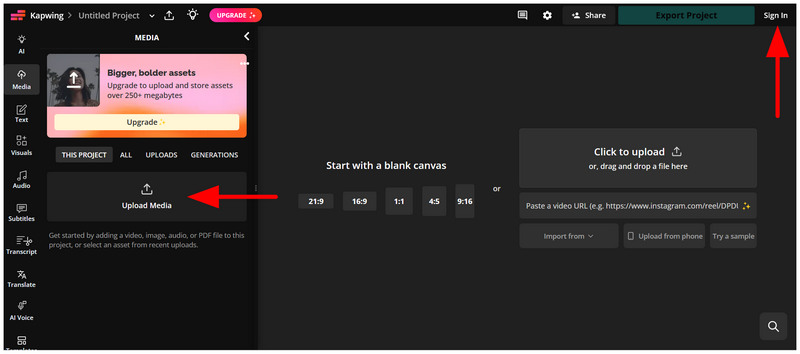
Once the video file has been added, select Audio, then click Upload or Paste a Link. Open your file manager and select the audio you want to edit.
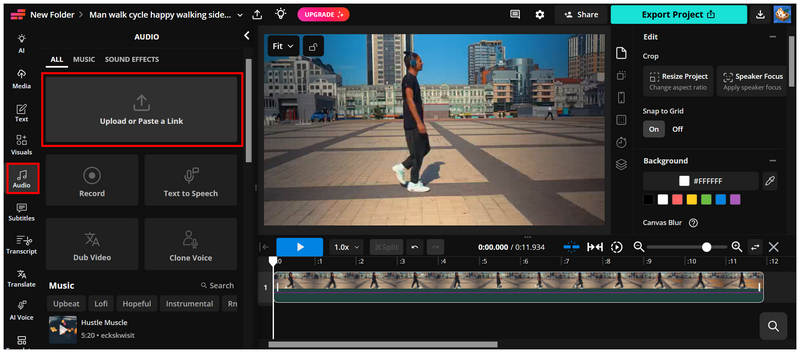
After the upload process, the audio file will be automatically added to the video editing timeline.
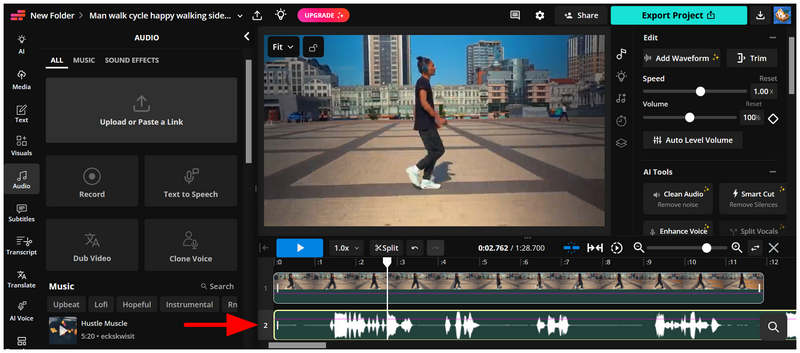
If you want an easier way to import audio files, Kapwing is a good option. Keep this in mind if you have a lot of audio files stored in online storage sites.
Clideo
Best Used For: Online video editing work without worrying about heavy resource consumption.
Finally, the final option in this article and the third online tool we will present is Clideo, which is also designed to make adding music to a video online extremely simple. Among its online tool competitors, Clideo offers the most versatile library of audio files. As such, the program is a great option if you plan to add stock audio to your projects.
Learn how to use the program using our guide below.
Go to the Clideo website and select the Video Editor option.
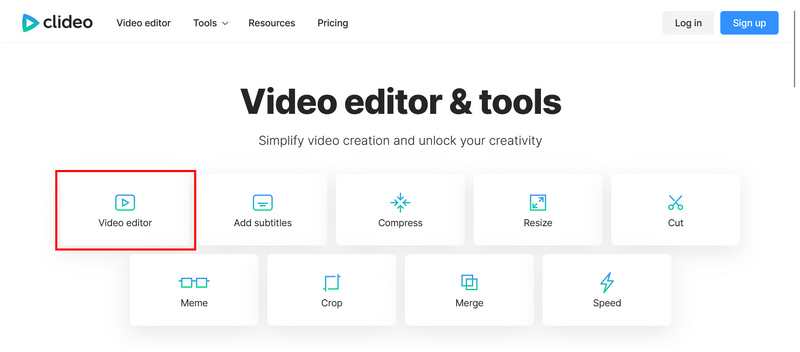
In the editing timeline, select Click to Upload to add the video you want to edit.
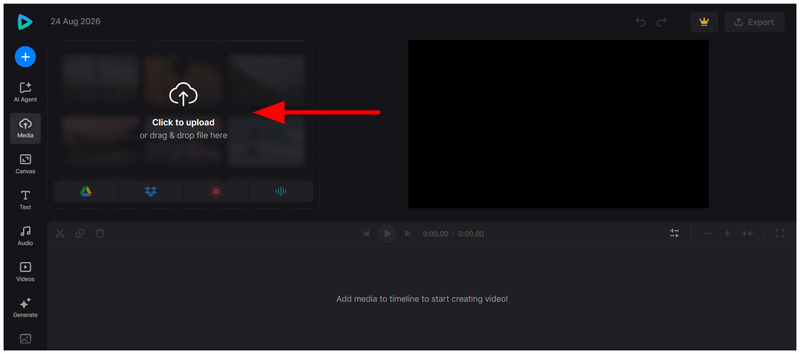
Once the video file has been imported to the program, select Audio. You may choose the available music in the online tool library or select the Upload button to add a local audio file. In this tutorial, we will use the local file option.
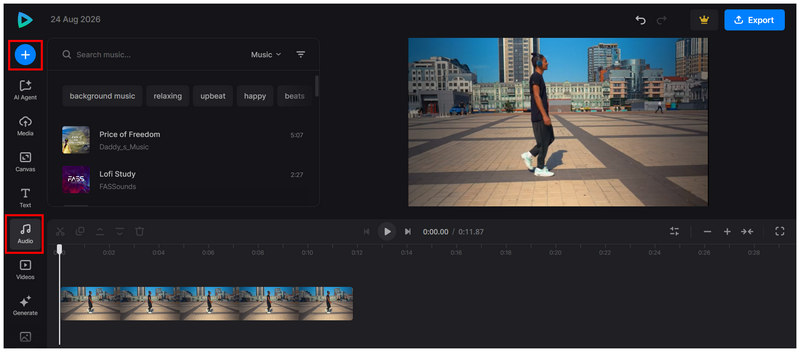
Once the upload is complete, the local file you selected will be automatically added to the editing timeline.
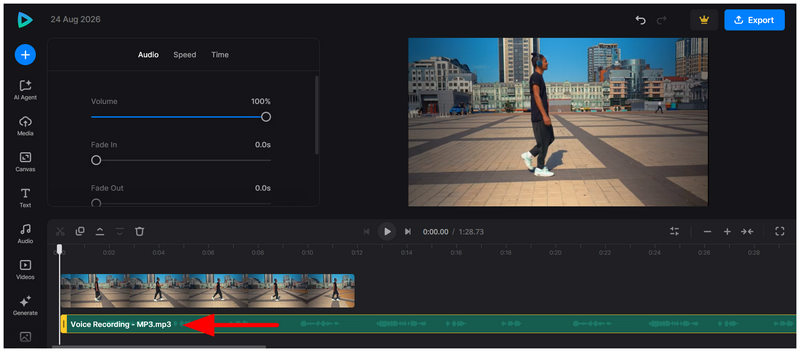
If you are having trouble downloading stock audio or want to avoid storing a bunch of it on your digital storage, Clideo may be a good option for your next video projects.
Part 4. FAQs About Adding Music to Video
Are online tools safe to use?
Yes, they are generally safe. However, since these programs work by uploading files to their servers, they are not the best for privacy. We recommend editing personal videos and projects on local editors.
Should I use online editors for advanced video editing?
Yes, you may. Some online editors offer essential editing tools, making them viable for professional editing. However, it is advisable to use the pro versions of these programs for professional editing.
Are mobile editing programs reliable for social media?
Yes, they are. Social media content is often simple and short. As such, mobile video editors should be enough when producing such videos.
What desktop-based solution is good for beginners?
Among the desktop options we presented, ArkThinker Video Converter Ultimate is by far the easiest to use. Although it is not a traditional editor, its Edit option makes it usable as one. For more advanced options, the program's MV Editor feature should also suffice.
Are professional video editors hard to use?
Yes, they are. Professional video editors are meant to be advanced and have limitless potential. This makes them unsuitable for beginners. As such, basic editing tasks such as adding music or compressing videos in Premiere Pro or DaVinci Resolve are not advisable for beginners.
Conclusion
Now that we have provided our readers with some of the most reliable video editors to learn how to add music to videos, we hope that this article has provided you with enough information to improve your journey as a video editor. Among the programs on this list, we will provide our prime recommendation for each platform. For desktop programs, ArkThinker Video Converter Ultimate is our recommendation due to its sheer simplicity. For mobile editing, InShot’s simplicity makes it the better choice over popular solutions. For mobile enthusiasts who want to avoid installation and setup, Clideo’s ease of use makes it the most recommended tool.
What do you think of this post? Click to rate this post.
Excellent
Rating: 4.9 / 5 (based on 624 votes)


